

Happy Thursday! Grab your coffee, blow the dust off your dash, and let’s talk grain.
We’ve officially crossed into the heat of June, and the markets are reacting to everything from boiling weather patterns to newly minted shipping terminals. Grab a refill—we’ve got some big shifts to cover that directly impact your bin space and your marketing strategy. ☕
📊 The Dashboard (KAND Quick Stats)
Indicator | Current Price | Daily Move |
🌾 Canola (Nov Futures) | $645.50 / MT | 📈 Up $4.20 |
🥖 Chicago Wheat | $6.24 / bu | 📈 Up $0.11 |
🐂 Alberta Live Cattle | $242.50 / cwt | 📉 Down $1.00 |
⛽ Farm Diesel (Est. Prairie Avg) | $1.29 / L | 📉 Down $0.02 |
🇨🇦 The Loonie (CAD/USD) | $0.731 | 📈 Up $0.003 |
🌾 Story 1: The Big Bin — Dust, Drought, and the USDA Cut
If you’ve been looking across the border at the U.S. Southern Plains lately, you’ve probably noticed it looks less like "amber waves of grain" and more like a classic John Steinbeck novel.
What happened: The USDA just dropped its June WASDE report, and they wielded a heavy machete on the U.S. winter wheat harvest outlook. After enduring a brutal, baking drought across major production regions like Kansas, Oklahoma, and Texas, the government finally admitted what local farmers knew weeks ago: the crop is shrinking.
Why it happened: The U.S. Plains went through a historic multi-month dry spell that basically turned the soil into concrete. While recent June rains have helped stabilize whatever survived, it’s too little, too late for the early-maturing winter wheat varieties. The roots simply lacked oxygen, water, and the will to live during critical developmental phases.
What it means for the farm gate: For Canadian producers holding onto high-protein spring wheat or durum, this is your cue to wake up and watch the tickers.
Fewer U.S. winter wheat supplies mean export buyers are going to have to look elsewhere to fill high-quality milling orders.
Chicago and Minneapolis futures are already showing green shoots of life.
The Bottom Line: Don’t panic-sell into the first minor rally, but if you’ve got old crop sitting in the bin eating up space, these supply cuts are going to give you some very attractive pricing windows over the next couple of weeks.
🚜 Story 2: Tractor Tech & Trends — Shipping From the County
Let’s shift over to Ontario, where grain logistics just got a massive upgrade that doesn’t involve sitting in a 401 traffic jam.
The News: Parrish & Heimbecker (P&H), alongside Picton Terminals, have officially cut the ribbon on their brand-new, bulk agricultural marine terminal in Prince Edward County. While they've been quietly running early operations since February, the site is now fully open for business. The milestone moment actually hit a few weeks back when the Ontario Venture vessel loaded up with wheat and soybeans bound for Quebec City—marking the first agricultural ship to leave Picton in nearly 75 years.
The Specs: This place isn’t just a couple of corrugated bins and an old auger.
It features 11 modern silos holding 34,237 metric tonnes of wheat (or about 32,100 tonnes of corn).
It receives and ships at a blazing 1,000 metric tonnes per hour (that’s 40,000 bushels an hour for those counting).
It features an automated kiosk system to get trucks in, dumped, and back on the gravel fast.
So What? If you farm in Eastern Ontario, this completely reshapes your local basis. Instead of trucking your grain hours away or dealing with the nightmare of highway bottlenecks, you’ve got a deep-water export point right in your backyard. Faster turnarounds mean lower freight costs and more money kept on the right side of the farm gate.
🥩 Story 3: The Grazing Pen — The El Niño Mirage
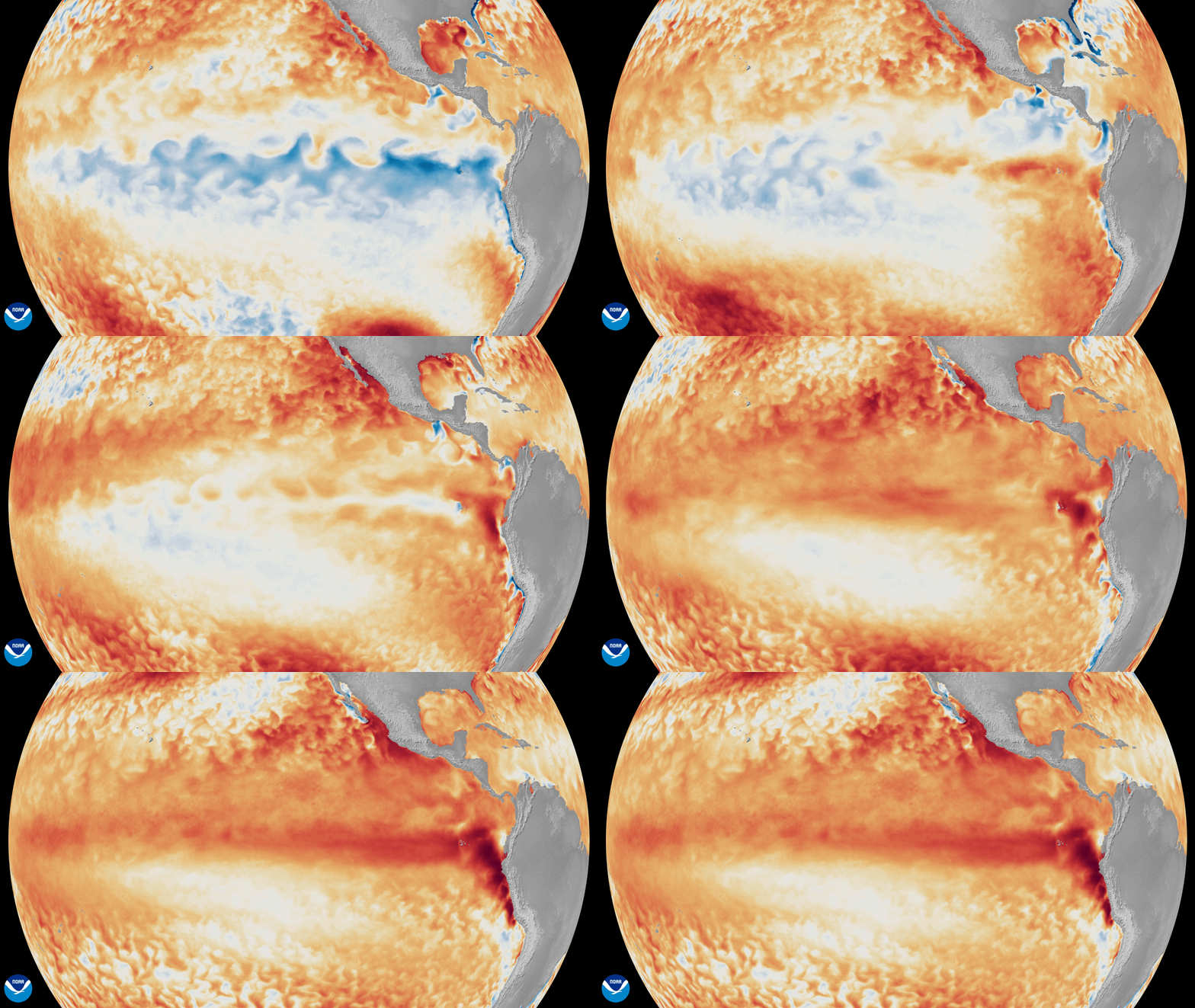
NOAA officially declared that El Niño is here, predicting a 63% chance it will become a "very strong" system by fall. If you listen to mainstream news, you’d think the entire North American continent is about to turn into an absolute oven by next Tuesday.
But renowned ag meteorologist Eric Snodgrass is telling everyone to take a collective breath and step away from the panic button.
"Historically, the correlations with El Niño and summer weather patterns are weak... Summer is defined by thunderstorm complexes, weak boundaries, and localized heat." — Eric Snodgrass
The Quick Hit: Don't let El Niño headlines dictate your summer pasture or crop management just yet. Snodgrass points out that June soil moisture and West Coast ocean temperatures matter way more for July heat ridges than what's happening in the equatorial Pacific.
The Fall Twist: Where it will matter is late harvest and winter. After several years of bone-dry autumns that left the Mississippi River too low for barge traffic and fields too hard to plow, a strong El Niño typically pushes the jet stream south. For the livestock sector, this means we could finally be looking at a wetter, more normal fall and a milder winter for the northern tier. Keep your eyes on the last week of June—that’s when the real summer weather puzzle locks into place.
🤡 Meme of the Day
The Statistic: The estimated price of a fully loaded, top-tier 2026 Class 10 Combine with a 45-foot draper head.
The Comparison: The actual 2025 Gross Domestic Product (GDP) of the island nation of Tuvalu (~$65 Million USD).
At the rate machinery prices are compounding, you’ll soon need to clear a sovereign nation's line of credit just to harvest 1,200 acres of canola.
🤝 The Sign-off
That’s a wrap on today’s KAND. Go check your rain gauges and tire pressures, and remember: if the weather forecaster is wrong today, there's always tomorrow's model update to complain about over morning coffee.
Have a safe evening out there on the dirt, and we’ll talk tomorrow!
— The KAND Editorial Team